Writing
Essays on retrieval, agent systems, and evaluation — plus older engineering war stories. Long-form pieces where the argument is mine are published here; I also co-write the infra + AI newsletter Bits & Neurons with Vivek Chandela. Earlier posts appeared on the ShareChat engineering blog and Medium.
Context as a ranking problem
Getting the right knowledge to the right agent at the right moment is a recommendation problem, and the field has two decades of answers.
Evidence-carrying systems
You cannot improve what you cannot locate. Three posts on making evidence, completion, and measurement legible enough to fix.
All writing
2026
-
Context Aging: What an Agent Forgets While It Is Still Running
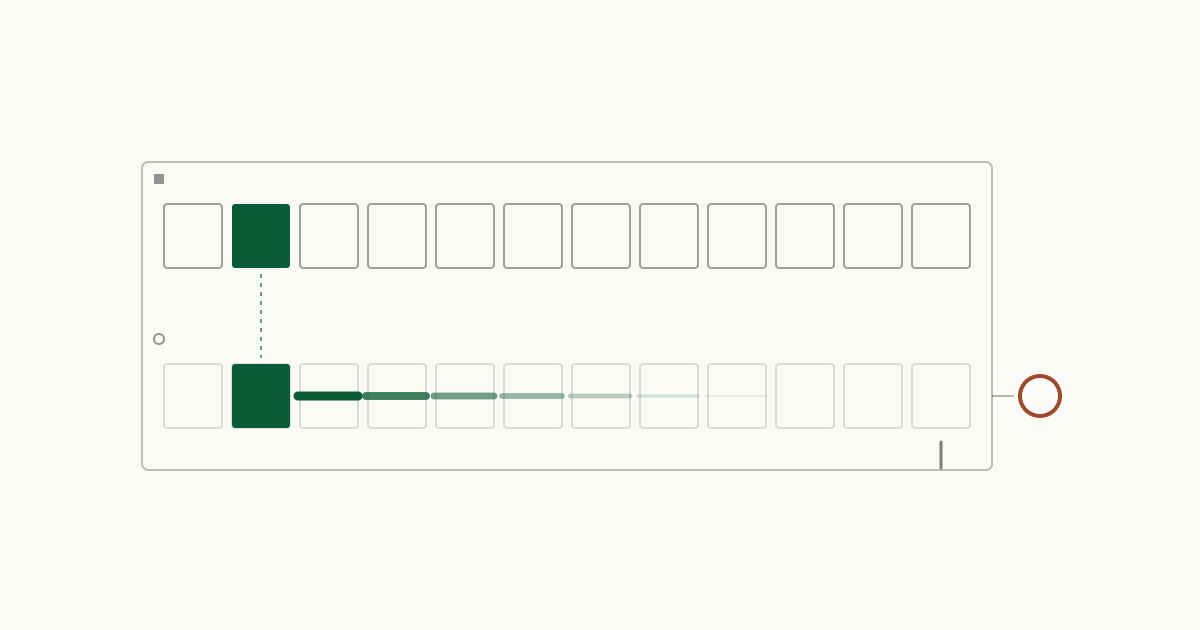
An agent read a pricing rule with two constant eras at tool call 12 — correctly, aloud, in its own reasoning. Two hundred and eighty calls later, the document it finished described the rule with one constant. Nothing had been truncated; the fact was in the context the whole time. Context rot, lost-in-the-middle and context poisoning are about how much, where, and what. This is about when — and why the fix is a durable tier the agent writes to at the moment of observation, reads back before it drafts, and is checked against by code before it is allowed to say it is done.
-
Agent Context Is a Recommendation Problem
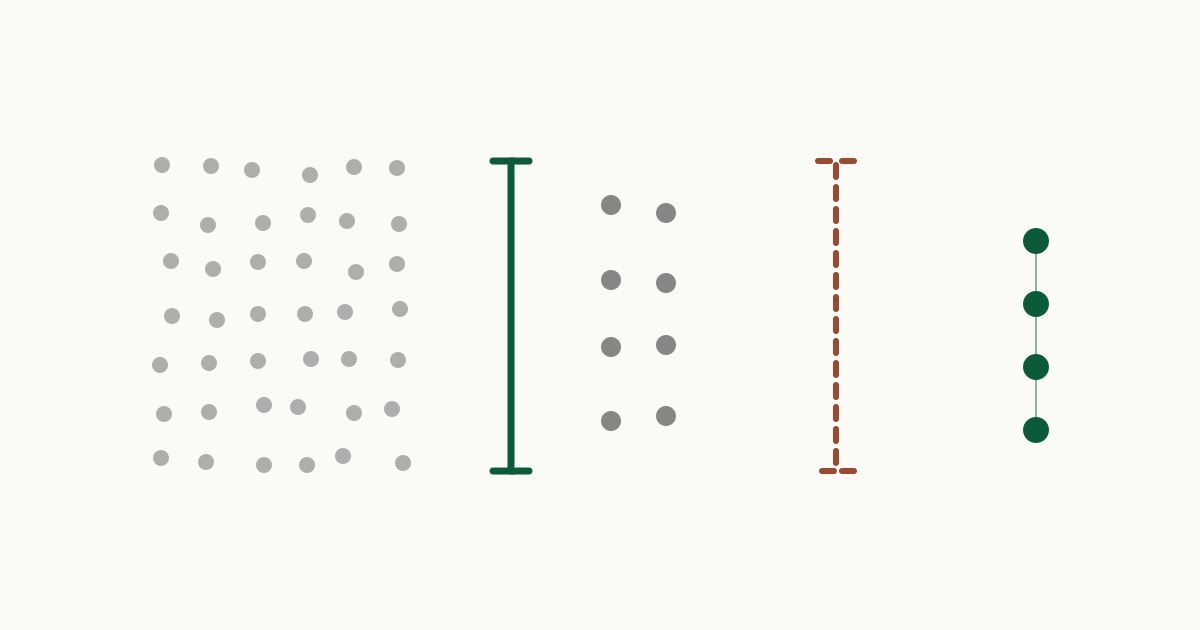
We built the retrieval system, registered the tools, wrote careful descriptions, and the agent never called them. Not once. The instinct was to write better descriptions. The correct diagnosis was that we had built a catalogue and expected it to behave like a recommendation — and the difference between those two things is most of what recommender systems research has been about since the mid-2000s.
-
Your Eval Has a Noise Floor
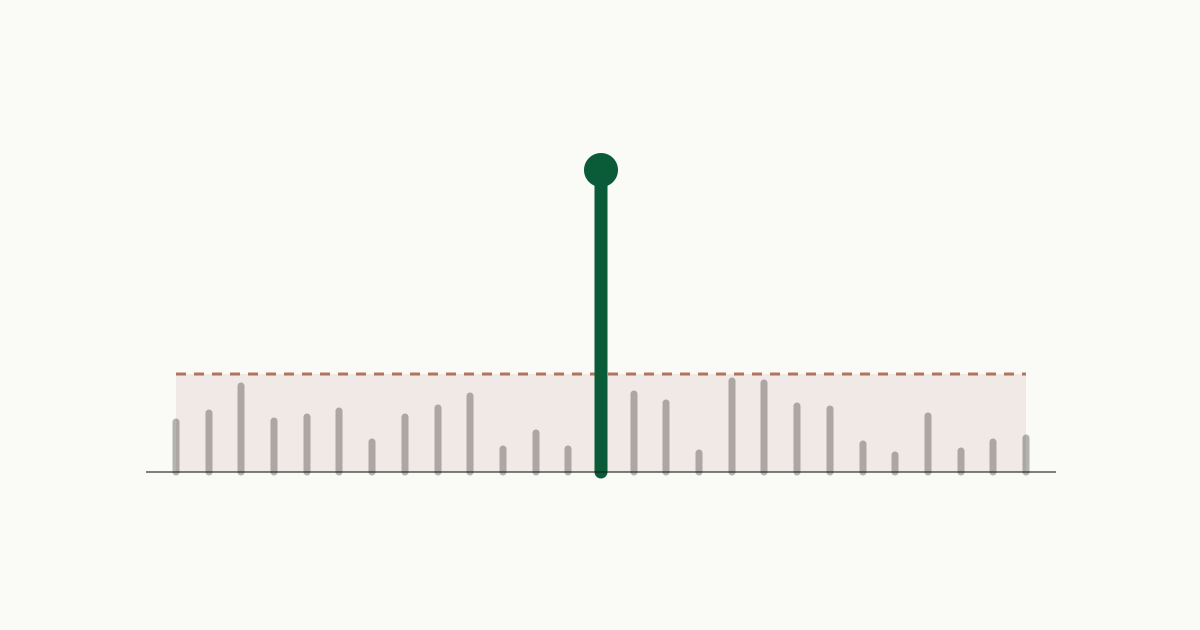
Re-judging a byte-identical artifact — same text, same rubric, same judge, one more pass — moved its score by four claims in sixty. Re-running an unchanged configuration moved it by about six. Which means any single-run improvement smaller than six claims was indistinguishable from running the same thing twice. Here is how to find your own floor, and what it costs.
-
Completion Is a Proof, Not a Status
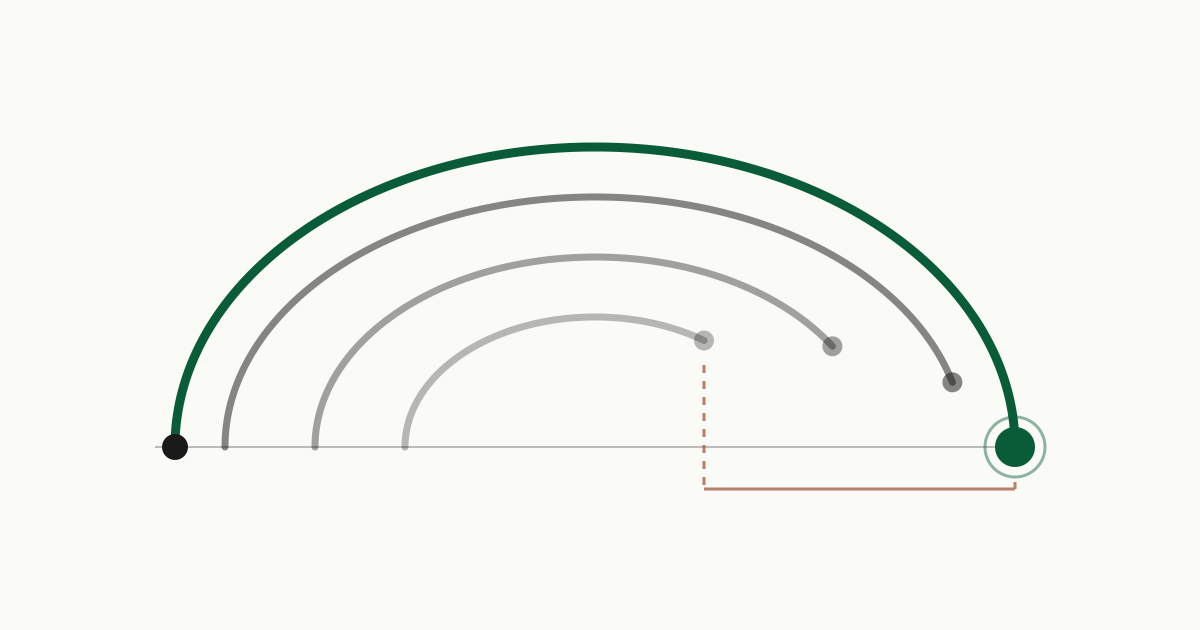
A command in a remote sandbox wrote one unbroken 4 MiB line. The HTTP stream returned no output and no terminal event, the producer was still alive blocked on its pipe, and the request had already discarded the handle used to cancel it. To the caller the tool call was over. To the machine the computation had not ended. Four independent clocks settle at the end of an agent run, and most platforms compress all four into a single status field.
-
Retrieval Is Not Delivery
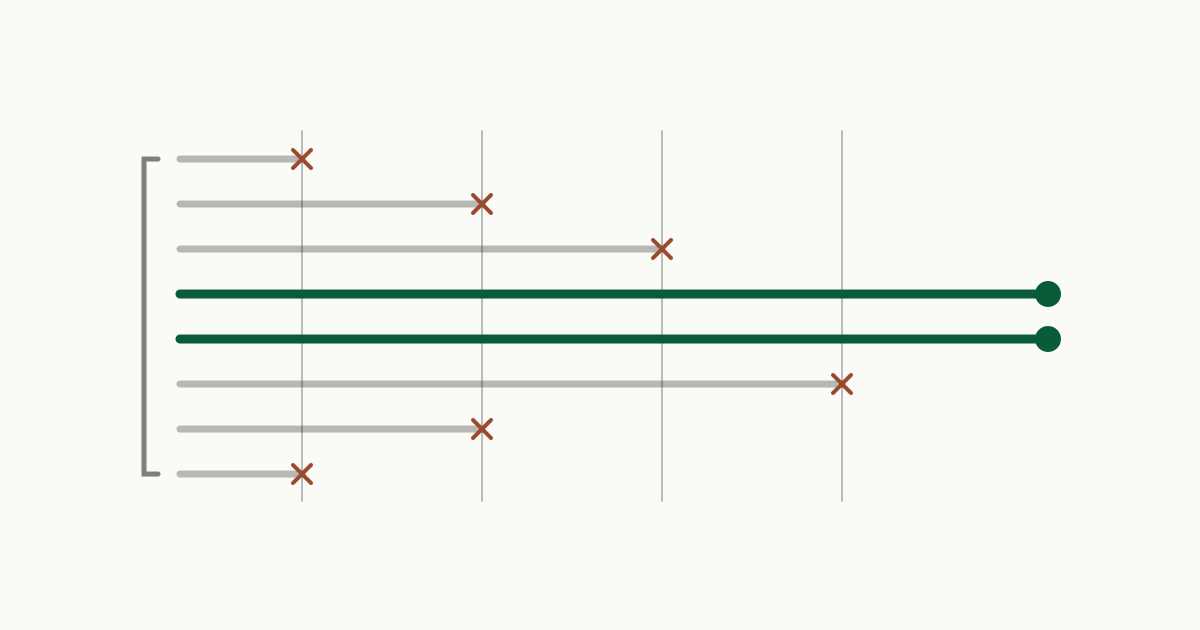
At baseline, a two-agent question-answering workflow found 65% of the expected facts while reading — but only 22% of that evidence survived the handoff to the writer, and 23% reached the final answer. Retrieval was never the bottleneck. The handoff was. Eight versions and 45 fixed questions later, here is what it took to measure the whole path instead of the last step.
-
Crash-Proof Custom Agents
Orchestrating long-running AI agents is a distributed-systems problem, not a model-intelligence problem. Our first pass — Celery plus database flags — split-brained on every crash and cancel. The fix was a durable-execution plane (Temporal), coarse activity boundaries, and signal-based human-in-the-loop resumption.
-

BYOC is not a Helm chart: Threat models and hard lessons
“Can you run this in our environment?” hides a stack of security and ops requirements that don’t exist in SaaS: the buyer controls the runtime, the network, the databases, and can often inspect every artifact you ship. A walk through the threat model, the gaps a Helm chart leaves behind, and what it actually takes to ship bring-your-own-cloud safely.
2024
-
Optimizing Golang Jobs for Cost Efficiency: A Beginner's Guide
A practical field guide to cutting Golang workload cost: GOMEMLIMIT, GOGC, GOMAXPROCS tuning, CPU profiling, and Kubernetes resource-request hygiene. Small, well-placed changes that add up to material line-item savings on GKE.
2022
-

Recommended — Just For You: How We Handle Personalisation at Scale
How ML powers the home feed on ShareChat and Moj at 200M-user scale.
-

Multimodal Automated Content Moderation: Preserving Integrity at ShareChat & Moj (Part I)
Multi-modal approaches to automated content moderation — combining text, image, and audio signals.
-

30 Hours — The Launch of Moj
Behind the scenes of building and launching Moj in 30 hours on July 1, 2020 — and the two-year journey that followed.
-

Fast, Accurate and Scalable Video Content Moderation
Spatial + temporal ML for moderating short-form video at scale.
2021
-

#LifeAtShareChat — Srijan Saket — Humming In Hall 3 to Crooning In A Studio
A personal profile on growing up in a musical family and finding the parallels between music and engineering.
Subscribe
New posts here land in the RSS feed. For the newsletter, subscribe to Bits & Neurons on Substack →